College sports used to be about scholarships, championships, and draft night dreams.
Now it’s about leverage, endorsement deals, transfer portal bidding wars, and athletes building personal brands before they ever turn pro.
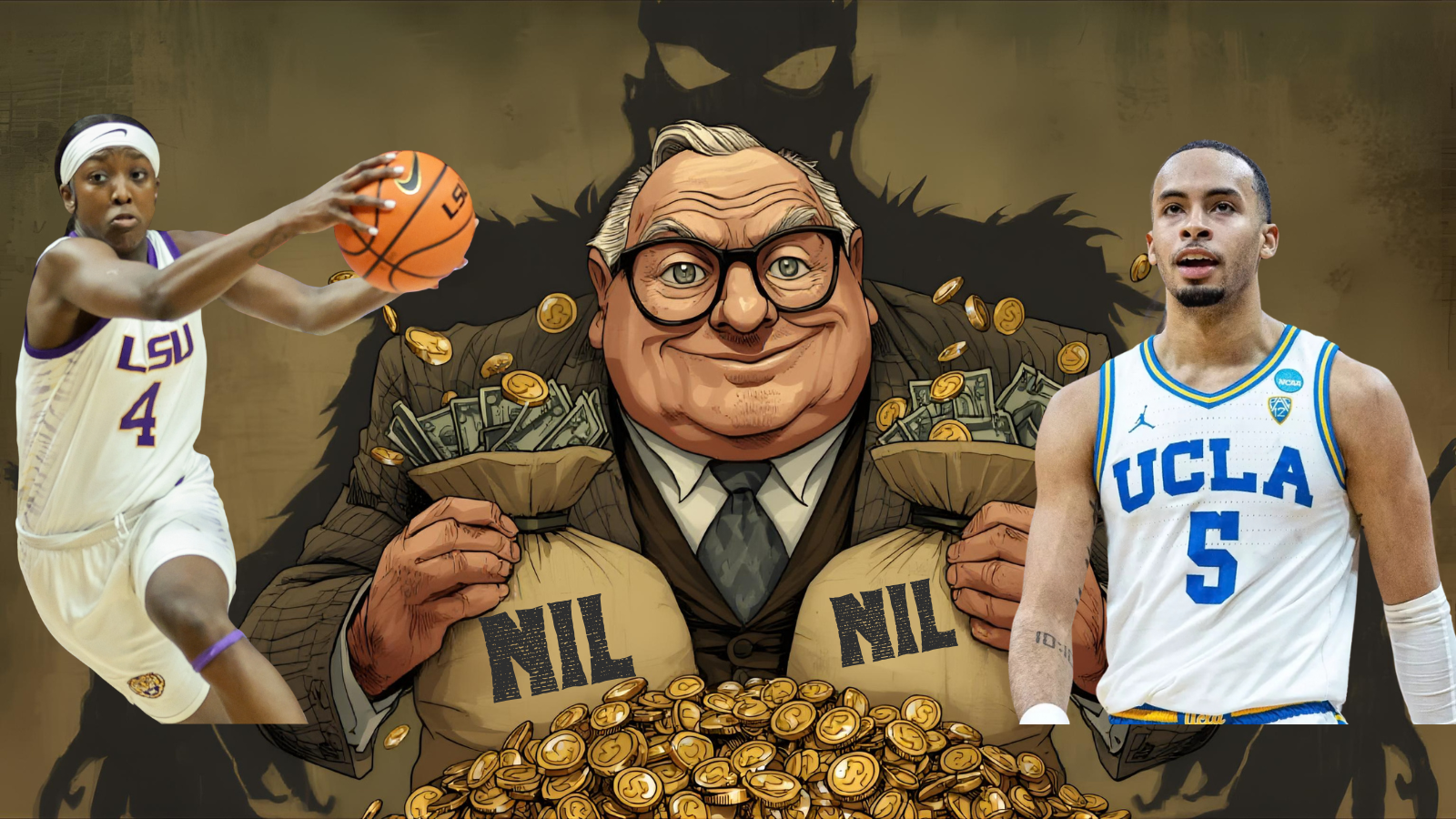
By 2026, Name, Image and Likeness (NIL) has fundamentally altered NCAA recruiting, roster retention, NBA draft decisions, and the power dynamic between schools and athletes. What started as a legal correction has turned into a full-scale college sports money revolution.
And the system isn’t settling down.
It’s escalating.
NIL Money Is Reshaping College Basketball Recruiting
NIL deals are no longer side income. They’re recruiting weapons.
Top college basketball programs now present NIL projections the way NBA teams present contract structures. Schools pitch brand development plans, social media amplification teams, local endorsement pipelines, and collective-backed income guarantees.
In the pre-NIL era, recruits chose programs based on exposure, coaching pedigree, and NBA pipeline history. In 2026, those factors still matter — but NIL earning potential is now central to the decision.
Elite recruits are asking:
- What is my NIL valuation?
- What collective backs this program?
- How many brand partnerships can I secure here?
- What media exposure does this city offer?
Recruiting has shifted from amateur promise to financial modeling.
The Transfer Portal Has Become College Sports Free Agency
The NCAA transfer portal used to signal instability.
Now it signals leverage.
With NIL money attached to mobility, players can test their market annually. A breakout season can double an athlete’s endorsement value. A move to a larger media market can increase social engagement and brand visibility.
Coaches are no longer just recruiting high school talent. They are defending their own rosters from NIL poaching.
This is free agency — just without salary caps.
Amari Bailey’s Eligibility Fight Shows How Far NIL Has Pushed the System
The case of Amari Bailey may be the clearest example yet of how NIL economics are pressuring long-standing NCAA rules.
Bailey, a former UCLA standout and second-round NBA draft pick, appeared in 10 games for the Charlotte Hornets before being waived. Instead of settling into the G League system, Bailey publicly expressed interest in returning to college basketball — a move that would challenge NCAA precedent.
According to ESPN reporting, Bailey hired representation to explore reinstatement options and stated directly, “I’m really serious about going back.” His goal: improve his draft stock and reshape his narrative.
The NCAA has historically barred players who sign NBA contracts from returning to college competition. Officials reiterated that position, signaling that Bailey’s case faces steep legal hurdles.
But the fact that the conversation exists at all underscores the new NIL calculus. For borderline NBA players, another year in a high-profile college program — backed by substantial NIL deals — can compete financially with limited professional minutes.
That reality did not exist five years ago.
Flau’jae Johnson and the Rise of the NIL Brand Athlete
If Bailey represents the legal edge of NIL’s impact, Flau’jae Johnson represents the economic ceiling.
The LSU guard is not just a basketball player. She is a cross-industry brand. A Division I starter. A recording artist. A national endorsement figure. A social media presence with cultural reach.
Her NIL portfolio exists because she combines performance with personality, content, and audience.
In 2026, being good at basketball is no longer enough.
Athletes who can:
- Build digital followings
- Activate sponsorships
- Cross into music, fashion, or lifestyle
- Maintain consistent content output
are dramatically more valuable in the NIL marketplace.
Women’s college basketball in particular has emerged as one of the strongest NIL sectors due to high engagement rates and strong brand relatability. In some cases, elite women athletes are out-earning male counterparts despite smaller television contracts.
That is a market correction few predicted.
NIL Collectives, Booster Influence, and the “Pay-for-Play” Debate
As NIL money grows, so do concerns.
Critics argue that booster-backed collectives have blurred the line between endorsement and pay-for-play. Some deals appear directly tied to recruitment decisions. Others fluctuate wildly based on hype cycles.
Locker room tension over deal disparities has become more common. Players now operate in environments where earnings are visible and public.
The NCAA insists NIL compensation must reflect legitimate endorsement value, not recruiting inducements. Enforcement, however, remains complex and inconsistent.
The Wild West phase isn’t over.
It’s simply more sophisticated.
How NIL Is Changing the NBA Draft Decision Process
The NBA pipeline used to be linear: dominate in college, declare early, secure rookie contract.
Now prospects are calculating risk differently.
A late first-round projection might mean limited rookie minutes and minimal endorsement upside. A return to college could mean another year of guaranteed NIL income, increased exposure, and draft stock improvement.
For borderline prospects, NIL has created an economic middle ground between amateur and professional.
The league remains the ultimate goal. But it is no longer the only viable financial strategy.
The Bottom Line: College Athletes Are Now Economic Stakeholders
NIL did not “ruin” college sports.
It revealed that college sports was always an economic machine.
Television contracts, apparel partnerships, and booster funding fueled billion-dollar ecosystems. The only participants excluded from direct compensation were the athletes.
In 2026:
- Players are brands.
- Schools are media platforms.
- Collectives operate like investment funds.
- The transfer portal functions like free agency.
- The NBA competes indirectly with NIL income streams.
The system is evolving in real time.
And the power balance in college sports will never look the same again.